Early Warning Signs of Poor Hole Cleaning: A Guide for Drilling Professionals
Share Your Thoughts and Additional Information
Spotting poor hole cleaning early keeps drilling operations safe, efficient, and cost-effective. When cuttings accumulate in the wellbore, it can lead to bigger issues such as stuck pipe, pack-off, lost circulation, and other complications. By watching real-time rig data and surface observations, drilling crews can catch subtle warning signs and act before small problems become major ones. This guide highlights key indicators from rig-site monitoring and common warning signs, drawing from industry practices to help crews act fast.
Basic Principles of Hole Cleaning
Proper hole cleaning is the process of removing drilled cuttings from the annulus and bringing them to the surface. This involves three main mechanisms:
Hydraulic lift: Mud flows upward in the annulus, carrying cuttings out.
Mechanical agitation: Drill-string rotation (or whirling motion) helps lift or resuspend settled cuttings, especially on the low side in deviated or horizontal wells.
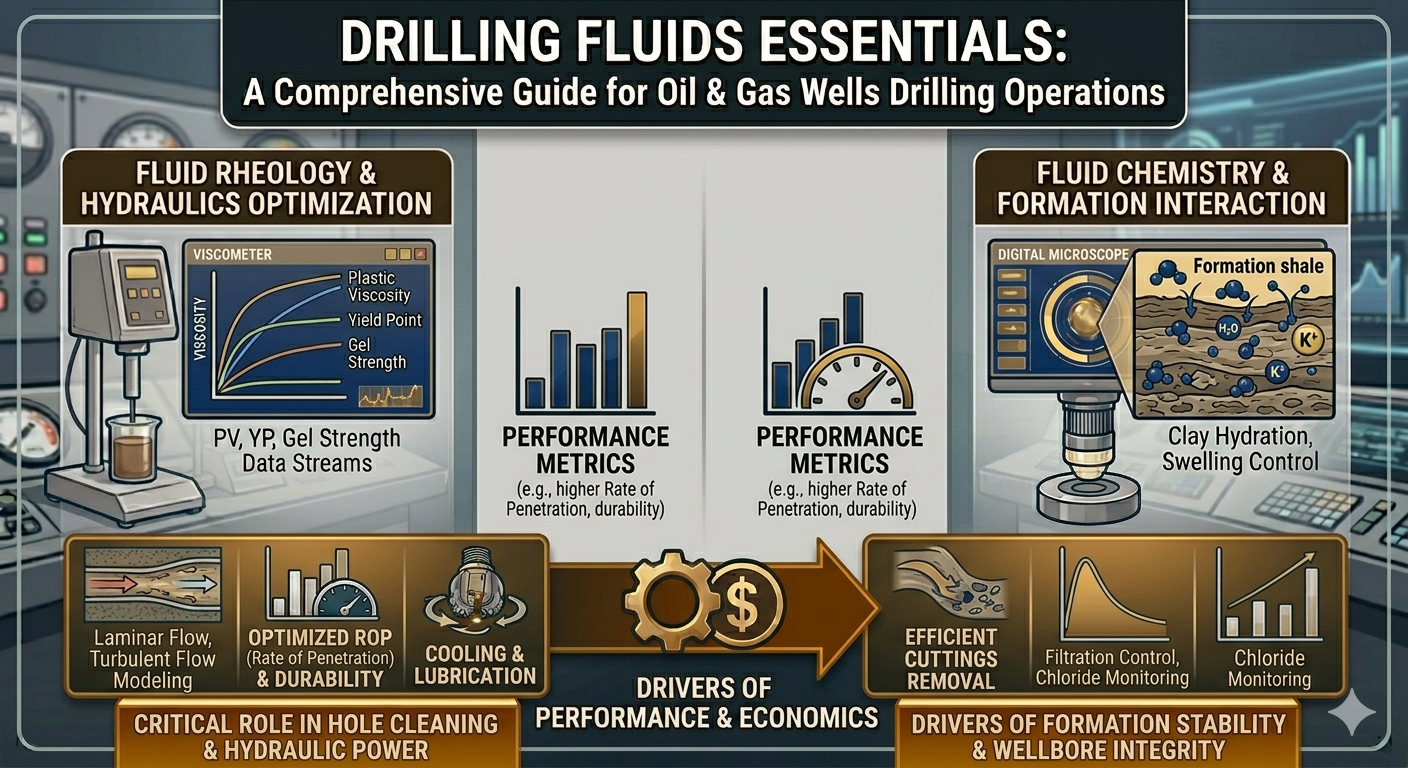
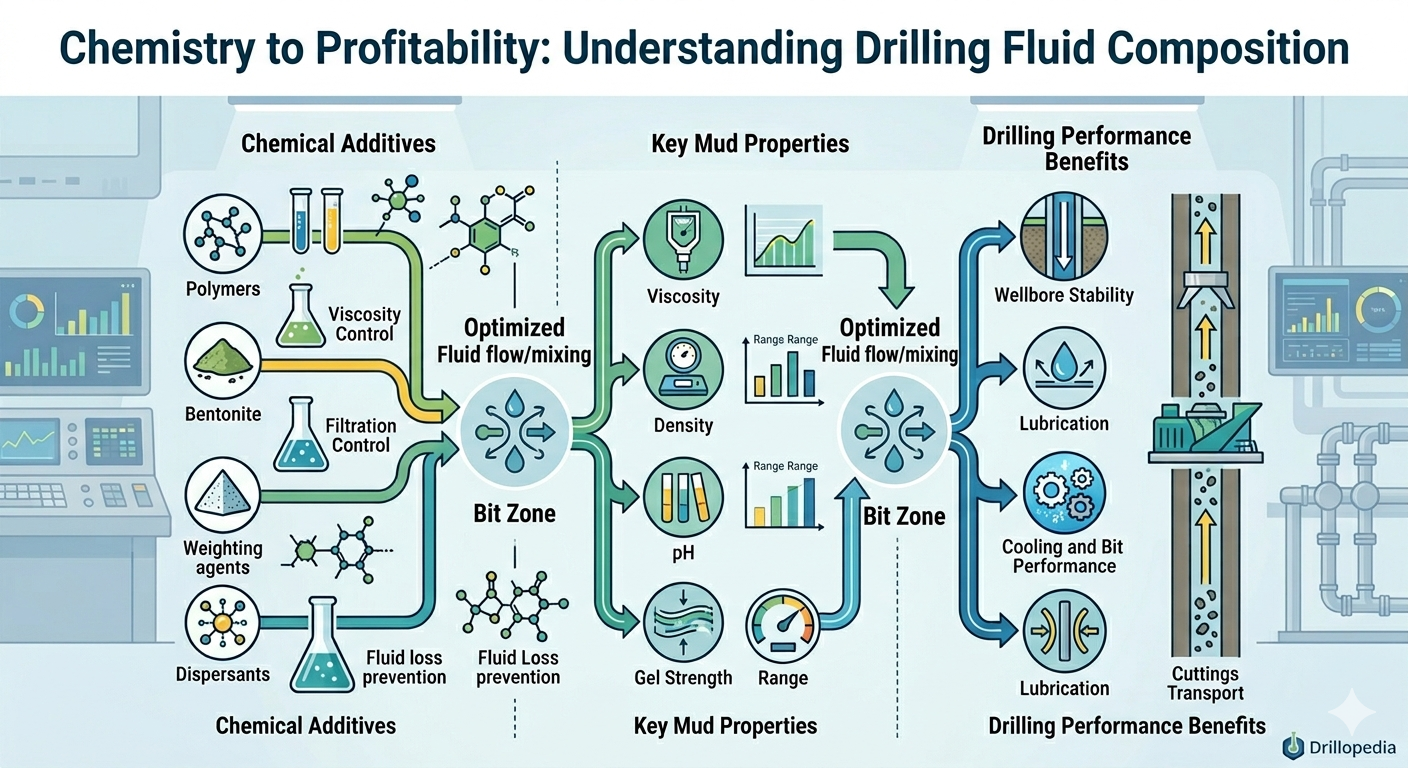
Fluid suspension: Mud rheology (viscosity, yield point, gel strength) helps suspend fine particles during circulation and static periods.
While vertical wells benefit from gravity to help lift cuttings, in deviated or horizontal wells, cuttings tend to settle and form beds on the low side. Once a bed begins to form, normal circulation may no longer remove all solids. Hence, early detection becomes critical.
Because of this, effective hole cleaning is not “set and forget.” It requires careful control of mud properties, flow rate, and string rotation, along with ongoing monitoring of wellbore behavior.
2. Why Poor Hole Cleaning Matters — Risks and Consequences
If early warning signs are ignored, hole-cleaning issues can escalate quickly, leading to serious operational risks:
Stuck pipe / pack-offs — Accumulated cuttings can compact into a bed that the drill string cannot move through, causing stuck pipe incidents, especially during connection or tripping.
Lost circulation or formation damage — Elevated ECD and pressure spikes from restricted annulus may fracture formation or force losses, especially in sensitive zones.
Reduced drilling efficiency — Lower ROP, bit wear, bit balling, need for more trips, increases non-productive time (NPT), and costs.
Problems running casing, cementing, or logging — Built-up cuttings beds can hinder casing run-in, cement placement, or wireline logging operations later.
One recent review noted that inefficient cuttings transport is a major cause of drilling problems: stuck-pipe events alone account for a significant share of NPT and cost overruns.
3. Key Rig-Site and Surface Indicators to Monitor
Drilling personnel, including drillers, mud engineers, and mud loggers, should track the following parameters every shift (or more frequently) to build a baseline and detect deviations.
3.1. Cuttings Returned to Surface (Shakers)
Volume of cuttings: Compare the volume of cuttings arriving at the shakers to the volume expected based on the drilled footage. A sudden drop in returned cuttings while the ROP remains steady may indicate that cuttings are being left downhole.
Appearance of cuttings: Ideally, cuttings should appear as coarse, well-defined fragments consistent with bit type. If, instead, they look small, rounded, or “mushy,” this often means cuttings are being recirculated or reground rather than lifted out, which is a sign of inadequate cleaning.
3.2. Torque and Drag Behavior
Rising torque or drag: As cuttings accumulate on the low side, the drill string encounters increasing friction, the rotating torque increases, and raising or lowering the string (e.g., during connections) becomes harder (higher pickup weight or excessive loss of weight on slack-off).
Torque spikes or erratic behavior: Sudden torque spikes when resuming rotation often indicate the drill string is “plowing” through a cuttings bed.
Overpull during trips or connections: Excessive overpull to free the string during trips or connections is a classic red flag for buildup.
3.3. Pump Pressure and Circulation Behavior
Elevated standpipe or pump pressure: If the annulus becomes restricted (from a cuttings bed), more pressure is needed to maintain flow. Standpipe pressure (SPP) may exceed the predicted value for a given flow rate.
Erratic pressure fluctuations or pressure spikes: As cuttings intermittently block flow paths (e.g., sliding or shifting in the annulus), sudden surges or spikes in pressure may occur, especially during transitions (stop/start pumping, connection time, or tripping).
3.4. Hole Fill Volume After Trips or Connections
Excessive fill: If, after a bottom-up or connection/trip, the volume of “fill” is greater than expected, it suggests a large amount of settled cuttings or debris was left downhole and is now being flushed out.
3.5. Rate of Penetration (ROP) and Bit Behavior
Reduced ROP or inconsistent drilling performance: If cuttings accumulate around the bit, ROP may slow because the bit regrinds old cuttings rather than cutting fresh formation.
Bit balling or increased string drag even during drilling: In some formations (e.g., shale), poor hole cleaning can aggravate balling or blockage around the bit, further reducing drilling efficiency.
3.6. Annular Pressure While Drilling (if monitored)
Unexplained ECD increase: In deviated holes, a growing cuttings bed can reduce effective annular flow area, raising equivalent circulating density (ECD), which may contribute to pressure-related problems such as formation fractures or lost circulation.
Note: While annular pressure (or downhole pressure while drilling) tools are helpful, they should not be the only source of hole-cleaning evaluation. The pressure responses can be ambiguous, and small fluctuations may result from changes in mud weight or rheology, not solely from solids buildup.
4. Best Practices for Early Detection and Effective Response
To minimize the risks, drilling teams should adopt the following practices as standard operating procedure:
Establish baseline behavior early
For each new well section (vertical, deviated, horizontal), record baseline rig data (ROP, return flow, torque/drag, pump pressure) when conditions are “normal.” Use real-time hydraulics or ECD modeling if available to predict expected values.
Use these baselines as a reference to spot even subtle deviations.
Use mud rheology and flow parameters proactively.
Maintain mud rheology (viscosity, yield point, gel strength) within design limits to ensure sufficient carrying capacity, especially for fine particles.
In deviated or horizontal wells, ensure annular velocity is sufficient. Deviated wells often require higher annular velocities than for vertical wells. High flow rates (within safe ECD/mud weight limits) help prevent bed formation.
Rotate the drill string (ideally 120–180 rpm or per best practice) to promote cuttings lift, particularly in inclined or horizontal hole sections.
Routine sweeps and circulation practices
Before trips, always circulate bottoms-up until cuttings return to the shakers and the flow returns clean. In deviated sections, circulation alone may not be sufficient and needs to be combined with string rotation.
For directional, high-angle, or extended-reach sections, use a tandem sweep strategy: first pump a low-viscosity (LV) pill to mobilize and erode cuttings beds, followed by a weighted or high-viscosity (HV) pill to lift and transport the loosened solids to the surface. This sequence improves bed agitation, enhances cuttings suspension, and provides more reliable hole cleaning in long, deviated intervals.
Continuous monitoring and logging of observations
Mud loggers, drillers, and mud engineers should log key observations, such as cuttings volume and condition at shakers, torque/drag, and pump pressures hourly or more frequently.
Any deviation from the baseline should be communicated immediately: e.g., fewer cuttings at the shakers while ROP stays constant, rising torque, erratic pump pressure, excessive fill volume after a trip.
Use real-time hydraulics / cuttings-transport models if available
Modern tools (e.g., real-time hydraulics, pressure-while-drilling (PWD), or automated cuttings-transport models) can offer early detection of cuttings loading or bed formation even before surface symptoms become obvious.
Compare measured ECD to predicted values; a persistent divergence may indicate annular restriction due to cuttings build-up or poor hole cleaning.
5. Practical Actions to Take When Early Signs Appear
When any of the above warning signs are observed, consider the following immediate and preventive actions:
Circulate the hole thoroughly — perform bottom-up and ensure cuttings return to the surface before any trip or connection. Do not rely on a single quick circulation.
Rotate the drill string during circulation - especially in deviated or horizontal sections, since the rotation helps mobilize settled cuttings beds.
Adjust mud properties or fluid program — if mud rheology or gel strength is sub-optimal, adjust to improve suspension capability; consider sweeps (low-vis and/or high-vis/high-weight) to clean the annulus.
Reduce ROP temporarily — lower drilling rate to reduce the volume of cuttings generated until cleaning is reestablished.
Log observations and escalate early — ensure rig crew, mud engineers, and supervisors are aware of deviations from baseline; treat early warning signs as actionable items, not “just data.”
Use real-time monitoring tools if available — correlate torque, ECD, annular pressure, and rotation data to detect the earliest onset of cuttings loading or bed formation.
References and Further Reading:
Al-Kinani, A., Aramco, S. et al. 2019. Stuck Pipe Early Warning System Utilizing Moving Window Machine Learning Approach. Paper presented at the Aramco Journal of Technology Summer Issue, 2020.
Drilling Course. 2016. Introduction to Hole Cleaning. Drilling Course Website, 28 February.
Gholami, R., Elochukwu, H., Fakhari, N., and Sarmadivaleh, M. 2015. A Review on Borehole Instability in Active Shale Formations: Interactions, Mechanisms and Inhibitors. Earth-Sci. Rev. 177: 2–13. https://doi.org/10.1016/j.earscirev.2017.11.002
Roy, S. and Power, D. 2002. Using Real-Time Hydraulics Modeling to Complement Annular-Pressure-While-Drilling Data. Paper AADE-02-DFWM-HO-37, presented at the AADE Technology Conference, Houston, Texas, USA, 2–3 April.
OilfieldTeam. n.d. Drilling Elements That Affect Hole Cleaning. OilfieldTeam Website.
DrillingForGas.com. n.d. Hole Cleaning — Problems and Tips. DrillingForGas.com.
“Guidelines for Hole Cleaning While Drilling.” n.d. 1library.net.
(2023) “A Novel Automated Model for Evaluation of the Efficiency of Hole Cleaning.” Energies 16 (13). https://doi.org/10.3390/en16134934
(2023) “Investigation of Hole Cleaning and Cuttings Transport in Drilling Operations.” Processes 13 (10). https://doi.org/10.3390/prs13103077
(2025) “Survey on Inefficient Cuttings Transport and Its Impact on Drilling Non-Productive Time.” Journal of Petroleum Science & Engineering, in press. https://doi.org/10.1016/j.petrol.2025.XXXX
Disclaimer: This guide synthesizes and paraphrases industry best practices from referenced sources for educational and field-reference purposes only. It does not reproduce copyrighted material verbatim and is not official company policy or engineering advice. All information belongs to the original authors and publishers who retain full rights. No claim of original authorship is made for referenced concepts, and the document is distributed in good faith for drilling professionals.